Iran Studied the Wrong War Game, America's Triple-Layer Kill Chain Just Proved It120 Ships Destroyed, One Strait Still Closed. Until the A-10 Changed the Math at Hormuz.Alexander Muse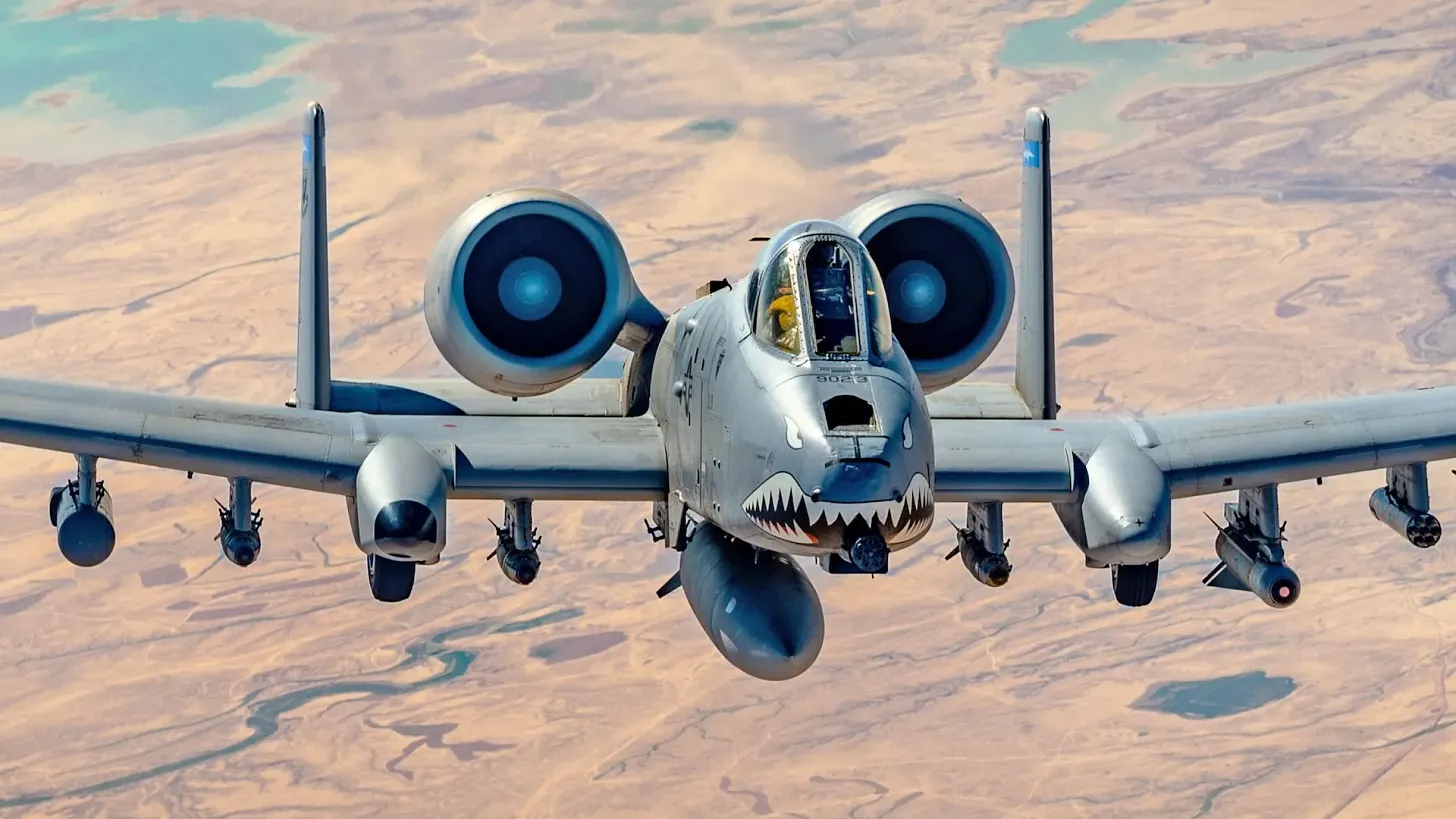
There is a particular species of institutional error that only becomes visible in hindsight, and only then at considerable cost. It is not the error of building the wrong weapon. It is the error of discarding the right one because it does not fit the threat you expect to fight. The US Air Force spent the better part of a decade trying to retire the A-10 Thunderbolt II, requesting $57M in its fiscal year 2026 budget submission to decommission the remaining 162 aircraft, two years ahead of its own previously stated schedule.
Congress blocked the effort, mandating a minimum fleet of 103 aircraft through September 2026. And then Operation Epic Fury began, the Strait of Hormuz closed, and the aircraft the Air Force wanted to scrap became the one the joint force needed most. The irony is not that the Warthog proved useful. The irony is that the environment where it proved essential was one American planners should have anticipated for decades.
American carrier aviation and Aegis destroyer capabilities were engineered for the open ocean, for blue-water engagements against sophisticated adversaries operating capital ships, cruise missiles, and ballistic anti-ship weapons. That engineering represents the correct solution to the problem it was designed to solve.
The Strait of Hormuz presented a categorically different problem. Iranian tactics relied on swarm attacks using fast, low-signature boats, often armed with rockets, mines, and short-range anti-ship missiles. These are targets that are difficult to detect and track using conventional high-altitude strike profiles.
The IRGC operated more than 1,500 such craft, composite and fiberglass hulls mostly under 15 tons, running between 50 and 70 knots, each carrying a Naser-1 anti-ship missile with a 35-kilometer range and a terminal speed of Mach 0.9, sufficient to mission-kill a frigate.
Their doctrine was swarm, overwhelm, and saturate, forcing the defender to choose which threat to engage while knowing that every defensive weapon fired costs more than every offensive boat it destroys.
continued at:
https://newsletter.amuseonx.com/p/iran-studied-the-wrong-war-game-americas?publication_id=840660&post_id=192315597&isFreemail=false&r=ch1ue&triedRedirect=true


